Power Hungry: How Data Centers Are Building Their Own Clean Energy Empires
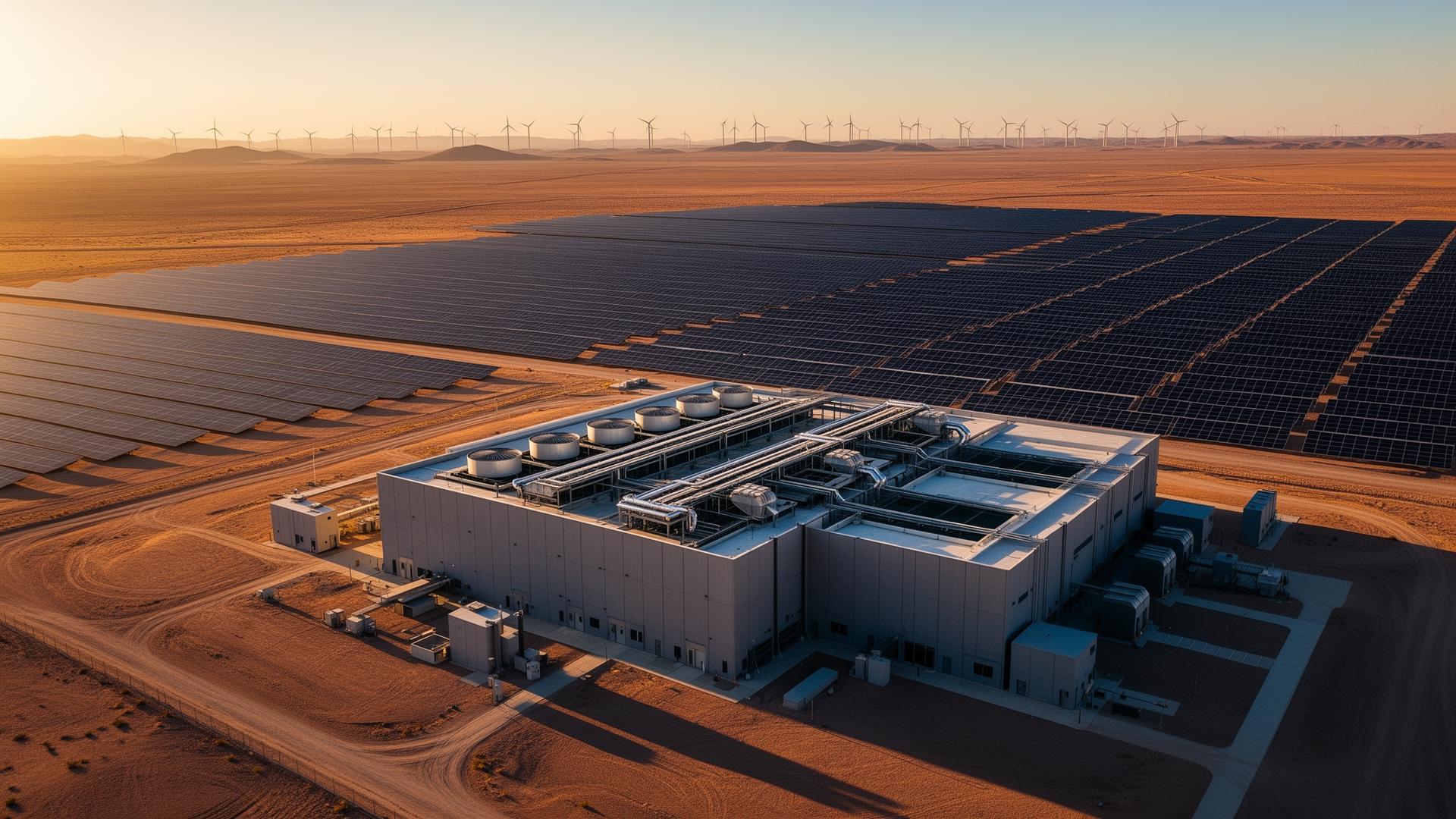
In the sun-scorched expanse of West Texas, a project is taking shape that signals a seismic shift in how America powers its digital future. The GW Ranch, a 7.65-gigawatt power complex being developed by Pacifico Energy, will generate more electricity than many mid-sized nations—and not a single electron of it will touch the public grid.
The facility, which received its final county permits in January 2026, represents the largest off-grid data center power project ever approved in the United States. Its purpose: to feed the insatiable appetite of hyperscale data centers that can no longer wait for traditional utilities to catch up.
Welcome to the new era of behind-the-meter energy development, where tech giants and their partners are building their own power plants rather than waiting in line for grid connections that may take the better part of a decade to materialize.
The Power Crisis No One Saw Coming
The numbers are staggering. According to recent industry analysis, U.S. data center power demand is projected to reach 945 terawatt-hours by 2030—roughly equivalent to the entire electricity consumption of Germany. The culprit? Artificial intelligence.
While a traditional data center might require 30 megawatts to operate, the new generation of AI-focused facilities demands 200 megawatts or more. Training a single large language model can consume as much electricity as a small city uses in a month. And with every tech company racing to deploy AI at scale, the demand curve has gone vertical.
The problem is that America's electrical grid wasn't built for this moment. Grid interconnection queues now stretch four to seven years in most markets. In some regions, the situation is even more dire.
- In Southern California, businesses report being unable to secure utility power for new facilities at any timeline
- Hawaii's constrained grid has effectively blocked large-scale data center development
- Even in traditionally power-rich Texas, the queue for grid connections has become a competitive bottleneck
"We're seeing a fundamental mismatch between the pace of AI development and the pace of grid infrastructure," said one utility executive who requested anonymity. "Something had to give."
Going Off-Grid: The Rise of Behind-the-Meter Power
What gave was the assumption that data centers would remain connected to the grid at all. According to analysis from the Distilled newsletter, roughly 48 gigawatts of proposed data centers—approximately a third of all planned facilities in the United States—are now pursuing behind-the-meter power solutions rather than waiting for grid interconnection.
Behind-the-meter refers to electricity generation that occurs on the customer's side of the utility meter, bypassing the public grid entirely. It's a concept that has existed for decades in industrial settings, but the scale at which data centers are now adopting it is unprecedented.
The GW Ranch project exemplifies this approach. The 7.65-gigawatt facility in Ward County, Texas will combine:
- 4.85 GW of simple-cycle natural gas turbines for baseload power
- 1.8 GW of battery energy storage for load balancing and backup
- 1 GW of solar generation for daytime clean energy production
"The grid interconnection process has become a significant barrier to entry for data center development," Kevin Pratt, COO of Pacifico Energy, told reporters at a recent industry conference. "By building behind the meter, we can deliver power to customers years faster than through traditional utility channels."
The Clean Energy Angle
For all the urgency driving behind-the-meter development, the trend has an unexpected beneficiary: clean energy.
Renewable energy projects can often be permitted and constructed more quickly than natural gas plants, which face pipeline constraints and increasingly stringent emissions regulations. In regions west of the Permian Basin, this advantage is particularly acute.
"West of El Paso, natural gas is genuinely hard to come by," explained one developer working on Arizona data center projects. "Solar and batteries, on the other hand, are abundant and getting cheaper every quarter."
This dynamic is driving a wave of large-scale behind-the-meter solar and storage projects. The Pioneer Clean Energy Center in Arizona, for example, is being developed specifically to serve data center customers with 300 megawatts of solar capacity and 1,200 megawatt-hours of battery storage—all without grid interconnection.
Perhaps the most innovative approach comes from Exowatt, a startup backed by OpenAI CEO Sam Altman. The company raised $50 million in November 2025 for its "dispatchable solar" technology, which uses thermal storage to provide around-the-clock clean power to data centers. Unlike traditional solar, which only generates during daylight hours, Exowatt's system stores solar energy as heat and converts it to electricity on demand.
Big Tech's Nuclear Renaissance
While solar and storage are solving the immediacy problem, the tech industry's hunger for 24/7 carbon-free power has sparked a broader renaissance in nuclear energy—a sector many had written off as too slow and expensive for the modern energy market.
In the most dramatic turn, Microsoft signed a deal to restart the Three Mile Island nuclear plant in Pennsylvania, site of America's worst nuclear accident. The facility, which had been shut down in 2019 due to economic pressures, will now provide dedicated clean power to Microsoft's data center operations.
Meta has been even more aggressive. In late 2024, the company signed a 1.1-gigawatt nuclear power agreement with Constellation Energy, drawing power from the Clinton Clean Energy Center in Illinois. Then, in January 2026, Meta announced a 20-year nuclear power purchase agreement with Vistra, the largest such deal in the clean energy sector.
"Nuclear provides something that solar and wind cannot: reliable, carbon-free baseload power around the clock," a Meta spokesperson said in announcing the Vistra deal. "For AI workloads that run continuously, that reliability is essential."
The appeal is straightforward. Unlike renewable sources, nuclear plants generate electricity constantly, regardless of weather or time of day. For data centers running AI training jobs that may run for weeks without interruption, that consistency translates directly to operational efficiency.
The Corporate Clean Energy Surge
Beyond nuclear, the sheer scale of corporate clean energy procurement has reached levels that would have seemed fantastical just a few years ago.
In December 2025, Google announced a strategic partnership with NextEra Energy—the world's largest generator of wind and solar power—to develop gigawatt-scale clean energy campuses specifically for AI data centers. The facilities will co-locate data centers directly with renewable generation assets, minimizing transmission losses and grid dependencies.
Not to be outdone, Meta signed contracts with NextEra for 2.5 gigawatts of clean energy across the United States in the same month—one of the largest renewable energy deals in corporate history.
Other major deals announced in recent months include:
- Microsoft's virtual power purchase agreement with EDP Renewables (February 2025) for wind and solar capacity
- Amazon Web Services' 650 MW solar procurement in Texas (December 2025)
- Oracle's partnership with Brookfield Renewable for dedicated clean power for cloud data centers
The pattern is clear: solar power purchase agreements exceeding 100 megawatts, once considered landmark deals, have become routine. The new threshold for major announcements has shifted to the gigawatt scale.
What This Means for the Clean Energy Industry
The data center boom is reshaping the clean energy sector in ways both promising and problematic.
On the positive side, the flood of corporate investment is accelerating project development at unprecedented rates. Developers who might have struggled to secure financing for speculative projects are now finding eager buyers willing to sign 15- to 20-year power purchase agreements. The certainty of demand is unlocking capital that had previously sat on the sidelines.
The behind-the-meter model also offers a potential solution to one of the grid's most persistent problems: interconnection congestion. By generating power at the point of consumption, these projects sidestep the transmission bottlenecks that have delayed countless renewable energy installations. They also reduce the need for costly grid upgrades that would otherwise be required to serve concentrated data center loads.
But there are tensions as well. Utilities, whose business models depend on selling electricity through the grid, are watching some of their most valuable potential customers build private power systems instead. In some states, regulators are beginning to scrutinize whether behind-the-meter arrangements are fair to customers who remain on the grid and may end up bearing a disproportionate share of maintenance costs.
There's also the question of whether data centers are genuinely helping the climate—or simply consuming clean energy that would otherwise have gone to decarbonize the broader grid. Critics argue that hyperscalers are effectively "greenwashing" by claiming renewable energy credits while their actual facilities may be powered by fossil fuels during peak demand periods.
The Road Ahead
The transformation of data center power is still in its early stages. The 48 gigawatts of behind-the-meter projects in development today represent just the first wave; analysts expect the trend to accelerate as AI adoption continues to grow and grid constraints worsen.
For the clean energy industry, the implications are profound. Data centers are rapidly becoming the largest single source of demand for new renewable generation—and their willingness to pay premium prices for reliable, carbon-free power is attracting investment that might otherwise have gone to oil and gas.
Whether this ultimately helps or hinders the broader energy transition depends on choices yet to be made. Will tech companies use their market power to drive genuine decarbonization, or will they simply hoover up available clean energy while displacing it elsewhere on the grid? Will regulators find ways to integrate behind-the-meter development into coherent grid planning, or will the rise of private power systems fragment the electrical infrastructure into a patchwork of incompatible fiefdoms?
"I think microgrids are going to be a big part of the solution going forward," Pratt of Pacifico Energy said. "The question is how we integrate them with the broader system in a way that benefits everyone."
For now, one thing is certain: the era when data centers simply plugged into the grid and let utilities worry about where the power came from is ending. In its place, a new paradigm is emerging—one where the companies that run the digital infrastructure are also building the physical infrastructure to power it.
The clean energy industry, long accustomed to selling into commodity power markets, is learning to speak a new language: one of dedicated supply, guaranteed uptime, and private grids scaled for the AI age. It's a transformation that will reshape not just how data centers operate, but how America generates and distributes electricity for decades to come.