Conservative Point Of Views on Clean Energy
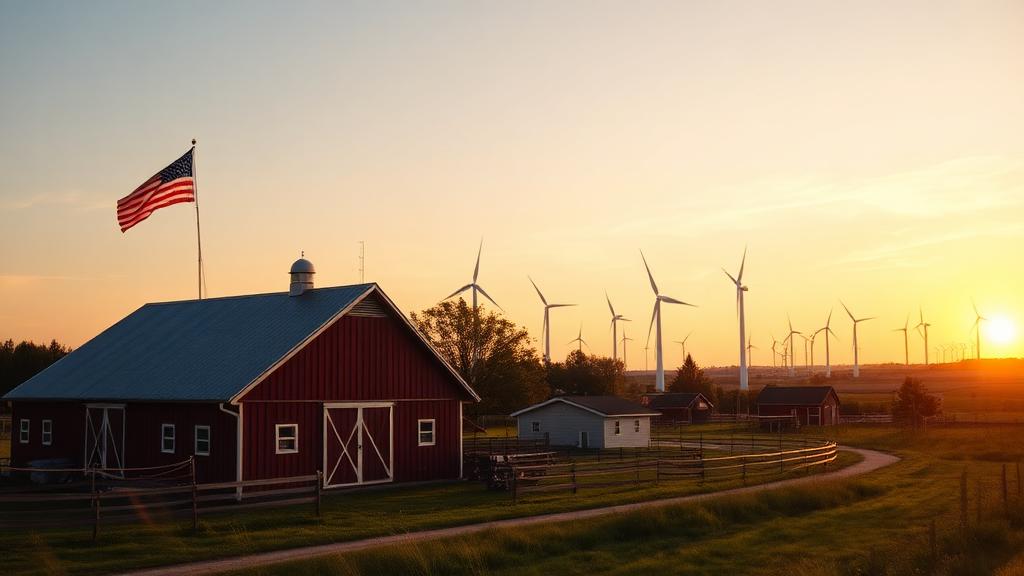
Conservatives are making an argument for clean energy that rarely mentions climate: it is about cheaper, more reliable power, respecting property rights, strengthening U.S. industry and reducing dependence on foreign fuel. As wind, solar and battery projects spread across red America, more Republicans say the transition can be a conservative success story.
When Representative Andrew Garbarino, a Republican from Long Island, joined two dozen GOP colleagues this spring to urge party leaders not to gut key clean-energy tax credits, the move sounded at odds with Donald J. Trump’s pledge to tear up President Biden’s climate law. But the lawmakers’ argument was cast in distinctly conservative terms. In their letter to the House Ways and Means Committee, they warned that scrapping the credits would disrupt private investment, jeopardize new factories and energy projects — many in Republican-held districts — and could raise electricity costs for their constituents. Preserving long-term tax incentives, they wrote, was about economic stability, not environmental virtue.
Their plea reflects a quieter current inside a party that still rails against “Green New Scam” policies on the campaign trail. As electric bills rise, electricity demand booms and new federal subsidies send billions of dollars into red states, a growing number of conservatives are promoting a different message: clean energy as a tool for economic growth, national security and local control.
Electric Bills at the Kitchen Table
One of the clearest windows into that shift comes from polling commissioned by the Conservative Energy Network, a right-of-center advocacy group that backs an “all-of-the-above” energy mix. In a survey of likely voters in Ohio and Pennsylvania this summer, 87 percent said they were concerned about the affordability of their utility bills, and nearly two-thirds ranked “keeping electricity affordable” as their top energy priority, far ahead of preventing blackouts or fighting climate change. Federal data cited in the group’s analysis show why: average residential power prices climbed from about 13.7 cents per kilowatt-hour in 2021 to 16.5 cents in 2024, rising faster than overall inflation and projected to keep increasing through at least 2026.
When voters were asked how to respond, majorities — including Republicans — favored a set of technocratic, often dull-sounding steps: upgrade aging transmission lines, build more long-distance wires to connect cheap generation to cities, let private companies compete with monopoly utilities to build that infrastructure and streamline permitting for grid projects. The language was not about carbon or climate targets. It was about competition, modernization and “cutting red tape” — phrases that conservative pollsters say test well in focus groups. In follow-up questions, nearly six in ten respondents said they would be more likely to back candidates who support grid upgrades to lower bills and improve reliability.
From Skepticism to “Energy Expansion”
For John Szoka, a retired Army lieutenant colonel and former Republican state lawmaker from North Carolina, those numbers help explain his own political evolution. When Mr. Szoka entered the legislature in 2013, he was openly hostile to solar power, dismissing it as “garbage” dependent on subsidies. Then a Republican lobbyist representing solar companies walked into his office. Instead of talking about melting ice caps, she talked about what cheaper electricity and lease payments from solar farms could mean for his largely rural constituents.
“She was a trusted messenger, and she told me things that challenged what I thought I knew,” he recalled recently on a Texas energy podcast. Curious, he spent six months digging into costs and grid studies. The more he learned, he said, the more he concluded that wind and solar could often provide lower-cost power than new fossil plants, especially once fuel risks and pollution were factored in. Mr. Szoka went on to chair the North Carolina House’s energy committee and today leads the Conservative Energy Network, which coordinates state-level groups in more than two dozen capitals. The network’s mission statement talks less about emissions than about “secure, reliable, affordable, clean American energy,” backing wind, solar, batteries, nuclear and grid upgrades while framing the agenda around free-market competition, domestic manufacturing and national security.
“Low-cost energy, restoring American energy leadership, defending property rights — those are conservative values,” he told one interviewer. “If you can reach the same goal without using trigger words that turn people off, that’s a win.”
Texas as a Case Study
Perhaps the starkest example of conservative-driven clean-energy growth is Texas, a Republican stronghold that now produces more wind power than any other state — more than three times as much as second-place Iowa. Last year, wind turbines generated over one-fifth of the state’s electricity, more than coal and nuclear and second only to natural gas.
That transformation began under two Republican governors, George W. Bush and Rick Perry. In the late 1990s and early 2000s, facing declining oil and gas production, state leaders sought to diversify the grid and reduce dependence on imported fuel. They deregulated the electricity market, set a modest renewable-energy requirement that the state quickly exceeded and approved roughly $7 billion in high-voltage lines to carry West Texas wind power to distant cities. The sales pitch was rooted in economics and rural development: wind projects brought construction jobs and long-term tax revenue to sparsely populated counties, and ranchers already accustomed to oil and gas leases could add turbines to their land and collect steady royalty checks — “the green that Republicans relate to.”
Today, Texas Republicans are more divided. Mr. Trump has spent years deriding wind turbines as ugly and unreliable, and state lawmakers have proposed new rules that renewable-energy developers say would tilt the market against them. Yet the physical legacy of that earlier experiment remains: an enormous build-out of low-cost generation that quietly lowers Texans’ power bills when the wind is strong.
The Eco-Right, Funded on a Shoestring
Texas is not an isolated case. Over the past decade, a small ecosystem of conservative-leaning climate and energy groups has taken shape nationally, often dubbed the “eco-right.” The Conservative Energy Network focuses on statehouses, pressing for grid modernization and opposing local bans on wind, solar and battery projects that, its leaders argue, infringe on landowners’ rights and discourage investment. Other groups, like Citizens for Responsible Energy Solutions and the American Conservation Coalition, court Republican members of Congress and young conservatives with messages about jobs, innovation and energy independence rather than atmospheric science.
Faith-based organizations have carved out their own lane. The Evangelical Environmental Network, for instance, ties air pollution and fossil-fuel exposure to pro-life concerns about children’s health, urging cleaner energy as a matter of protecting “the least of these.” According to an analysis cited by the Chronicle of Philanthropy, these right-of-center groups still receive less than 1 percent of all climate-related charitable funding, dwarfed by traditional environmental organizations on the left. Yet they have helped seed bipartisan efforts like the House Climate Solutions Caucus and given political cover to Republicans who want to talk about clean energy in economic rather than ideological terms.
Permitting, Property Rights and the Local Backlash
Even as more national Republicans warm to clean-energy tax credits and manufacturing subsidies, the politics can look very different at the county commission. Local fights over wind farms, solar arrays and battery storage facilities have erupted across rural America, many of them in conservative areas. Researchers at Columbia University’s Sabin Center for Climate Change Law have documented hundreds of local ordinances restricting or banning new renewable projects, from strict setback rules to outright moratoriums.
At the National Conservative Energy Summit in Cleveland this fall, developers and regulators warned that such measures are slowing or stopping projects that could bring new investment to struggling regions. Mr. Szoka, in opening remarks reported by the clean-energy news site Canary Media, urged conservatives to see those rules as the “heavy hand of government” telling farmers what they can and cannot do with their land. At the federal level, a separate conservative push is focused on environmental permitting. The chair of the House Conservative Climate Caucus is expected to join the Conservative Energy Network and allied groups on Capitol Hill to call for “urgent action” to speed up approvals for pipelines, transmission lines, power plants and other projects, arguing that America’s “outdated permitting system” adds years and millions of dollars to projects, driving up consumer costs and deterring private investment.
Permitting reform has emerged as one of the rare areas where fossil-fuel producers, utilities and large renewable-energy developers often find themselves on the same side — though they may disagree on which projects should benefit most.
Following the Money Into Red Districts
If political rhetoric lags behind reality, the geography of recent energy investment offers one explanation. Analyses by business groups and advocacy organizations have found that a large majority of private-sector spending announced in response to the Inflation Reduction Act’s clean-energy tax credits is landing in Republican-held districts. That helps explain why figures like Mr. Garbarino have become unexpected defenders of parts of a law that no Republican voted for.
For lawmakers whose districts are poised to host battery factories, solar-panel plants or utility-scale renewable projects, repealing the underlying credits would mean pulling the rug out from under those deals. Their letters and statements rarely praise the climate ambitions of the Biden administration. Instead they emphasize the need for “energy dominance,” manufacturing competitiveness and affordable power — terms meant to align the credits with Mr. Trump’s broader energy agenda even as he promises to roll them back.
The Next Test: Big Solar and Batteries
Whether this emerging conservative case for clean energy can extend to the most controversial projects — vast solar farms and large battery installations — is an open question. Developers say the ingredients are there: utility-scale solar has become one of the cheapest sources of new electricity in much of the country, and battery storage can help keep the lights on during extreme weather by shifting power from times of surplus to periods of peak demand. Both can be sited on private farmland or brownfields, offering lease payments and local tax revenue.
For conservatives, the case that seems to gain traction looks less like a climate crusade than a back-to-basics energy pitch: projects that lower long-term bills, make the grid more resilient, reduce reliance on foreign fuel and give landowners another way to earn income from their property. But the backlash is real, and the politics are fraught. In many places, opposition to solar and storage projects is tangled up with broader mistrust of elites, fears about changing rural landscapes and frustration with federal agencies. Eco-right organizers say they have learned that national environmental groups are often the least effective messengers; a Republican veteran, a local pastor or a county farm bureau leader, they argue, can be far more persuasive in making the economic case.
For now, the conservative coalition around clean energy is tentative and uneven, stronger in state capitols and business circles than at party rallies. Yet the basic forces driving it — high electricity prices, surging power demand and the lure of new investment — are not going away. As Mr. Szoka likes to tell audiences, America remains a nation of builders. The question confronting conservatives is not whether the country will construct a new wave of power plants, transmission lines and storage projects, but what role they will play in shaping it — and whether they will see clean energy as an economic opportunity to seize, or a cultural symbol to fight.